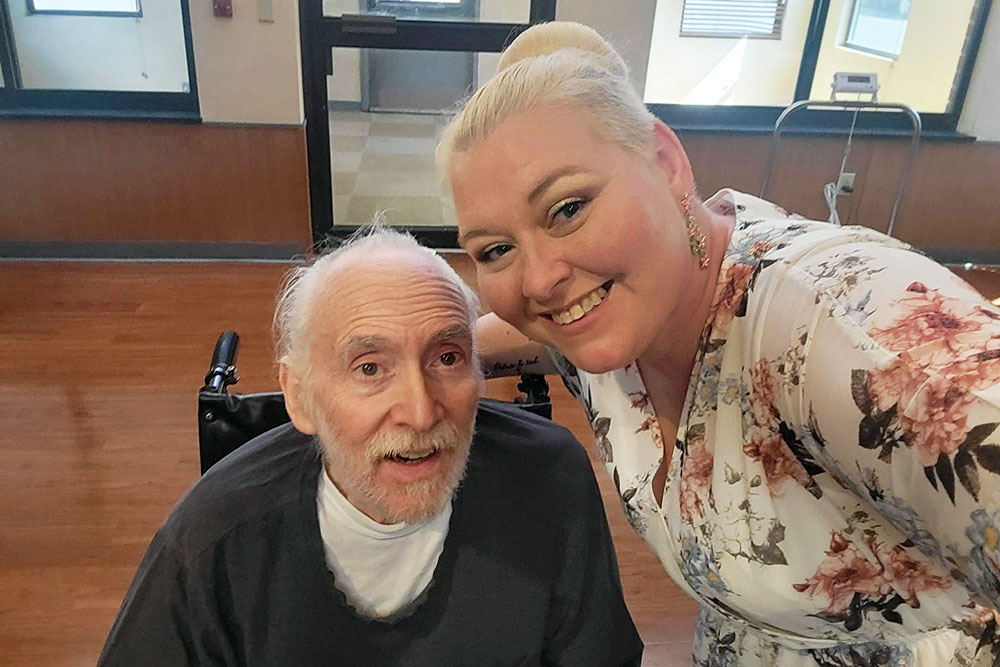
I spend a lot of time talking about dementia. Brain changes, communication challenges, behaviors, care strategies, and all the things we can do to create a better experience for someone living with the disease. But today, I want to shift the spotlight to some very special people who don’t always get the recognition they deserve.
The care partners.
The spouses, adult children, grandchildren, friends, neighbors, and professional caregivers who show up day after day, often without fanfare, applause, or even a simple thank-you.
And I think it’s time we celebrate them a little more.
Because while dementia may be the diagnosis, it is the care partners who are often working behind the scenes to keep life moving forward. They are the appointment schedulers, medication managers, meal planners, chauffeurs, activity directors, problem-solvers, detectives, cheerleaders, and sometimes even the entertainers. They are the people who somehow manage to wear 15 different hats before they’ve even had their second cup of coffee.
And let’s be clear, some days that second cup of coffee is absolutely necessary!
The Little Things That Are Actually Big Things
One of the things I have come to appreciate most in my work is that some of the most meaningful moments in dementia care are the ones that might seem insignificant to someone looking in from the outside.
It’s the husband who patiently answers the same question for the tenth time, even though he knows there will probably be an eleventh. It’s the daughter who learns that her mother’s favorite music can turn a difficult afternoon into a spontaneous dance party. It’s the professional caregiver who discovers that getting dressed goes much more smoothly when the process involves a little singing and a lot less talking.
It’s the spouse who learns to let go of correcting every detail of a story because the joy of sharing the moment is far more important than getting the facts right. It’s the care partner who notices that someone is becoming overwhelmed and quietly changes the environment before frustration has a chance to build.
These moments may not come with trophies or certificates, but they are victories worth celebrating.
I often remind care partners that success in dementia care doesn’t always look the way we expect it to. Sometimes success is a shower without a struggle, a meal enjoyed together, a genuine smile, or a peaceful afternoon. Sometimes it’s recognizing that today is not the day to tackle a particular task and having the wisdom to try again tomorrow.
And sometimes success is simply making it through a really challenging day and being willing to show up again the next morning.
That deserves recognition, too.
The Creativity of Care Partners Never Ceases to Amaze Me
If there were an award for creative problem-solving, I am convinced dementia care partners would dominate the competition.
I have seen people come up with some of the most clever, thoughtful, and downright entertaining ways to navigate everyday challenges. They learn to turn ordinary tasks into games, use humor to diffuse tension, and find creative ways to encourage participation without making someone feel as though they are being told what to do.
A favorite song becomes the soundtrack for getting dressed. Folding towels becomes an opportunity to feel productive. A familiar recipe sparks a wonderful conversation. A simple compliment changes the entire mood of an interaction.
And sometimes, a little silliness goes a very long way.
I love those moments when I see a care partner discover something that works. There is often a look of surprise, followed by a smile that says, “Well, why didn’t I think of that sooner?”
The truth is, dementia care requires a tremendous amount of creativity, flexibility, and the willingness to try something different. What works beautifully on Monday may not work at all on Tuesday, so care partners are constantly learning, adapting, and finding new ways to connect.
It’s a skill set that deserves far more credit than it receives.
Let’s Hear It for the Professional Care Partners
I also want to take a moment to recognize the professional caregivers who enter someone’s home or care community and become such an important part of their everyday life.
I have the privilege of working alongside some truly remarkable care partners, and I wish more people could see the wonderful things I get to witness.
I see caregivers who take the time to learn about the person behind the diagnosis, discovering their interests, their routines, their sense of humor, and the little things that bring them joy. I see caregivers who recognize when someone needs a little extra time, who offer a reassuring hand, or who find a way to make a difficult task feel less intimidating.
I see care partners celebrating the smallest accomplishments with genuine excitement. I see them laughing, singing, dancing, and finding moments of connection in the middle of an otherwise ordinary day.
And I see the patience it takes to do this work well.
Professional caregiving is so much more than helping someone get dressed, preparing a meal, or assisting with daily activities. It is about building trust, preserving dignity, recognizing changing abilities, and helping someone feel safe and valued.
When I see a caregiver make a meaningful connection with someone living with dementia, I am reminded that the best care isn’t simply about completing tasks. It’s about the relationship that makes those tasks possible.
To the professional care partners who bring compassion, creativity, humor, and heart into their work every day, please know that what you do matters. More than you may ever realize.
And to the Family Care Partners, I See You, Too
Family care partners deserve their own standing ovation.
Because unlike a traditional job, caregiving doesn’t always come with scheduled breaks, weekends off, or the opportunity to leave work at the end of the day. For many spouses and family members, caregiving becomes woven into nearly every aspect of life.
You may be managing appointments, medications, meals, household responsibilities, and the changing needs of someone you love, all while trying to maintain some sense of normalcy in your own life.
You may be learning an entirely new way of communicating with someone you have known for decades. You may be adjusting routines, making difficult decisions, and trying to anticipate needs that seem to change from one day to the next.
And through it all, you are still a spouse, a son, a daughter, a friend, and a person with your own needs, interests, and responsibilities.
I think we sometimes forget how much care partners are carrying because so much of their work happens quietly. There isn’t always someone there to witness the patience it took to get through the morning routine or the creativity required to turn a difficult moment around.
But those efforts matter.
And they deserve to be acknowledged.
You Don’t Have to Be Perfect to Be Amazing
Now, before anyone starts thinking that being celebrated means you have to be endlessly patient, cheerful, and completely unflappable, I want to clear something up.
You don’t.
Care partners are human. You are allowed to get frustrated. You are allowed to feel tired. You are allowed to have days when your patience is running on empty and your sense of humor has temporarily left the building.
You are allowed to need a break, ask for help, or admit that something is harder than you expected.
In fact, I would argue that recognizing your own limits is an important part of being a good care partner.
We sometimes place unrealistic expectations on caregivers, as though compassion means never feeling overwhelmed or patience means never becoming frustrated. But caregiving isn’t about perfection. It’s about learning, adapting, and doing the best you can with the resources and energy you have available.
Some days you will feel like you’ve figured it all out. Other days, dementia will remind you that it has a few surprises up its sleeve.
That’s okay.
The goal isn’t to get everything right. The goal is to keep learning, keep connecting, and remember that your well-being matters, too.
A Little Appreciation Goes a Long Way
I believe we need to do a better job of celebrating care partners, not just during designated appreciation weeks or special occasions, but throughout the year.
A genuine thank-you, a kind word, or simply acknowledging the effort someone is making can mean more than we realize. For family caregivers, offering to sit with their loved one for an afternoon, bringing over a meal, or taking something off their to-do list can be a wonderful way to show appreciation.
For professional caregivers, recognizing their creativity, patience, and ability to connect with the people they support can help reinforce the value of the work they do. Too often, caregiving is recognized only when something goes wrong, while the countless things that go right quietly pass without acknowledgment.
I would love to see us change that.
Let’s celebrate the caregiver who figured out how to make bathing less stressful. Let’s recognize the daughter who found a way to bring joy back into her mother’s afternoons. Let’s applaud the husband who learned that a hug sometimes works better than an explanation. Let’s thank the professional caregiver who treats the person they support as an individual, not a checklist of tasks.
And let’s remember to celebrate the care partners who are still figuring things out, because effort deserves recognition, too.
Here’s to the Care Partners!
So today, I want to offer a heartfelt thank-you to every care partner who is doing their best to make life a little easier, a little more comfortable, and a little more joyful for someone living with dementia.
Thank you for the patience you show, even when it’s difficult. Thank you for the creativity you bring to everyday challenges. Thank you for the laughter, the music, the kindness, and the moments of connection that might otherwise never happen.
Thank you for learning new approaches, adjusting expectations, and recognizing that the person living with dementia is still a person with a lifetime of experiences, preferences, feelings, and strengths.
And thank you for showing up, even on the days when showing up takes everything you’ve got.
I hope you take a moment to recognize your own accomplishments, no matter how small they may seem. Celebrate the good moments. Laugh when you can. Give yourself grace when things don’t go as planned, and never underestimate the difference you are making.
Because behind so many meaningful moments in dementia care is a care partner who took the time to make that moment possible.
And if you ask me, that’s something worth celebrating!
Jen Riggs is a Dementia Specialist and Director of Dementia Services at Dementia Family Support. Through dementia education, caregiver coaching, family consultations, and professional training, she helps families and care partners better understand brain change and develop practical, compassionate approaches to dementia care.
Dementia Family Support — Because understanding changes everything.