A simple guide for families learning how to navigate dementia with compassion, patience, and understanding.
When someone you love is living with dementia, it can feel like you have been dropped into an entirely new world with a language no one taught you.
Conversations change.
Routines shift.
Behaviors may feel confusing or unpredictable.
Many families ask the same question:
“How do I do this the right way?”
While there is no perfect roadmap, there are some guiding principles that can make the journey smoother. Think of them as the ABCs of dementia care—simple but powerful reminders that help families support their loved one while also caring for themselves.
A — Adapt
One of the most important lessons in dementia care is learning to adapt.
Dementia is progressive, which means abilities change over time. What worked last month may not work today, and what works today may not work next year.
Instead of expecting your loved one to adjust to the world around them, dementia care often requires us to adjust the environment, routines, and expectations.
Example
Your father becomes frustrated while getting dressed because there are too many clothing choices.
Instead of insisting he choose from a full closet, you adapt by laying out two simple options.
This small change reduces confusion and helps him maintain independence.
Adaptation turns daily struggles into manageable moments.
B — Be Patient
Dementia changes how the brain processes information.
Your loved one may take longer to understand questions, complete tasks, or respond in conversation.
Patience becomes one of the most valuable tools a caregiver can have.
Example
You ask your mother if she wants tea or coffee. She pauses for a long time before answering.
Instead of repeating the question quickly or answering for her, you give her time to process.
Silence can feel uncomfortable, but it allows the brain the space it needs to work.
Patience communicates respect.
C — Connect
Even when memory changes, the need for connection remains strong.
People living with dementia still want to feel valued, heard, and understood.
Connection often happens through emotion rather than logic.
Example
Your spouse insists someone stole their wallet.
Instead of arguing that it is impossible, you focus on connection.
You say,
“That must feel really frustrating. Let’s look for it together.”
Acknowledging feelings helps reduce anxiety and strengthens trust.
D — Don’t Argue
Correcting someone with dementia often leads to conflict because their brain processes reality differently.
Arguments rarely resolve the situation—they usually increase distress.
Example
Your mother says she needs to leave to pick up her children from school.
Instead of correcting her by saying the children are grown, you respond:
“You were always such a dedicated mom.”
Then gently redirect the conversation.
Choosing peace over correction helps everyone feel calmer.
E — Engage
Meaningful engagement improves quality of life for people living with dementia.
Activities do not have to be complicated. Often the simplest activities bring the most joy.
Examples of engagement
- folding laundry together
• listening to favorite music
• sorting cards or photos
• taking a short walk
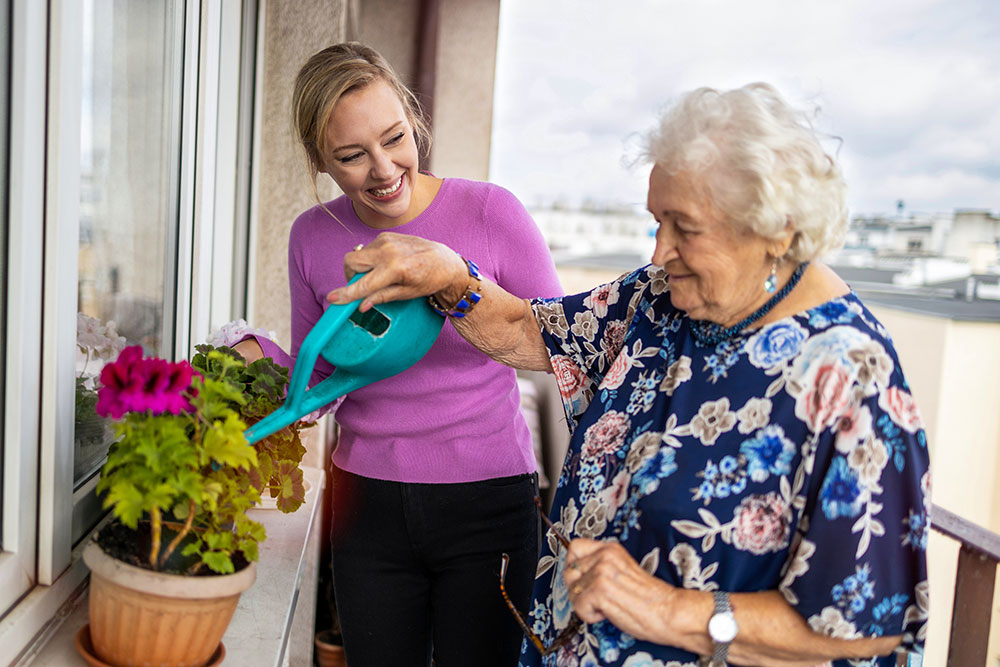
• watering plants
The goal is not productivity. The goal is purpose and connection.
F — Find Support
Dementia caregiving is not meant to be done alone.
Many caregivers try to carry everything themselves, but this often leads to exhaustion and burnout.
Support can come from many places:
- family members
• friends and neighbors
• professional caregivers
• dementia support groups
• dementia specialists
Building a support system helps caregivers maintain their own well-being while providing better care.
G — Give Grace
There will be difficult days.
Caregivers sometimes feel guilt when they become frustrated, overwhelmed, or emotionally drained.
But caregiving is incredibly demanding, and perfection is impossible.
Giving yourself grace means recognizing that you are doing your best in a challenging situation.
It also means remembering that your loved one is not intentionally causing difficulties—their brain is changing.
Compassion for yourself is just as important as compassion for them.
Dementia Care Is a Learning Journey
The ABCs of dementia care remind us that the goal is not perfection—it is connection, understanding, and flexibility.
By learning to adapt, practice patience, and build support, families can create moments of comfort and meaning even in the midst of change.
You Don’t Have to Navigate Dementia Alone
At Dementia Family Support (DFS), we help families better understand dementia through education, coaching, and compassionate guidance.
Whether you are just beginning this journey or navigating later stages of dementia, support is available.
Because no one should have to walk this path alone.